




All images courtesy of RDG
As part of the collaborative team at RDG Planning and Design, I worked alongside an excellent group of designers and consultants. Grateful for the collaboration and the chance to contribute to this project.
Project Description:
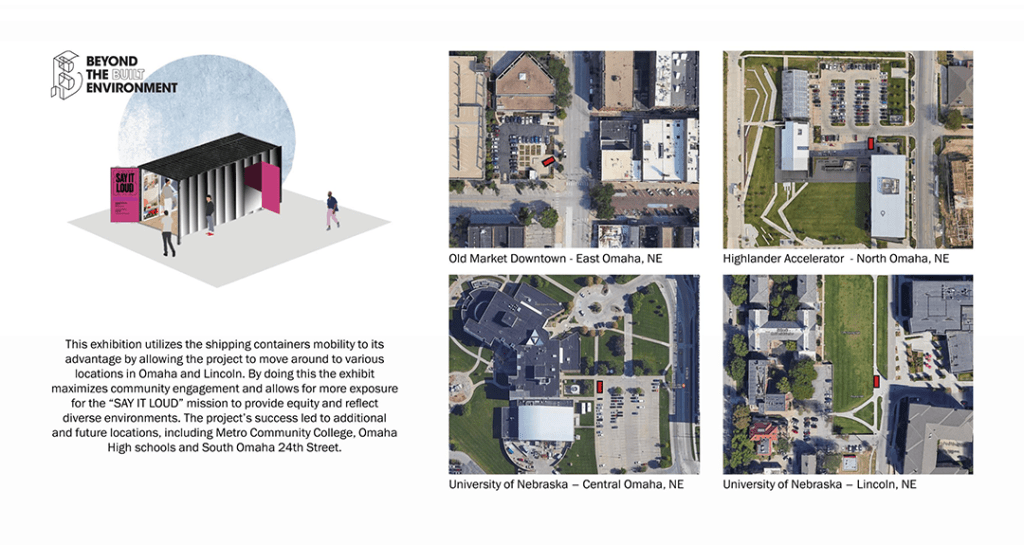
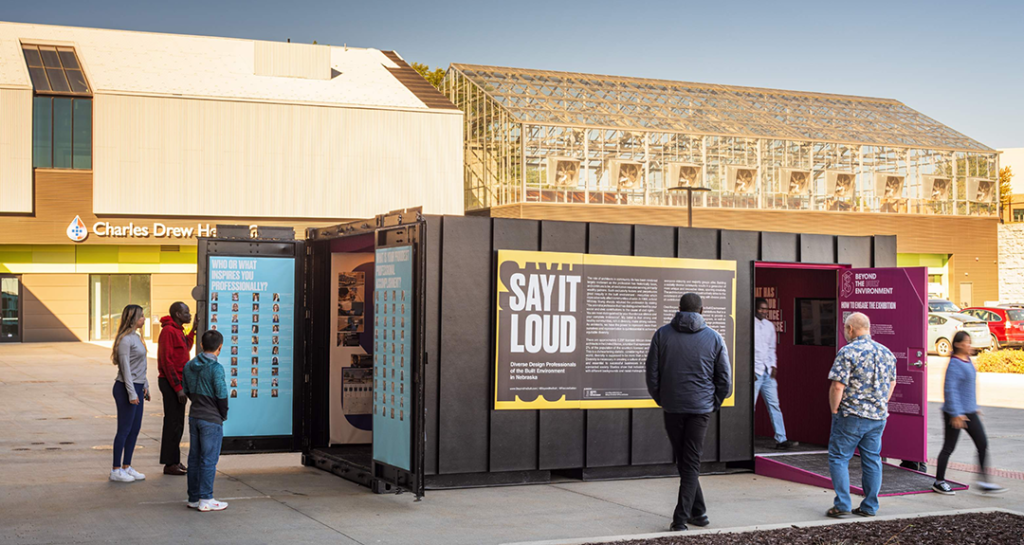
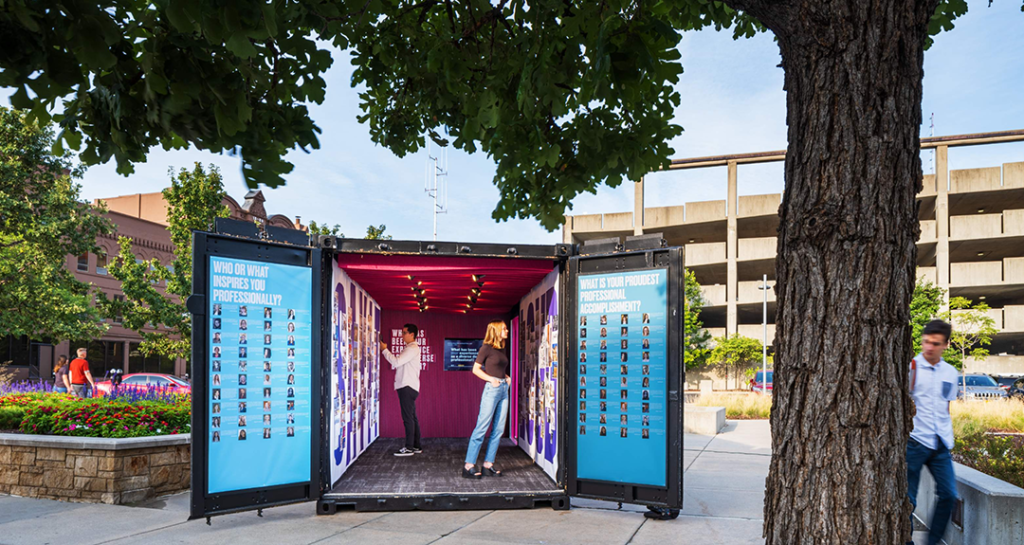
The goal of the initiative is to highlight minority groups of professionals working in the built environment. Architects, contractors, engineers, interior designers, landscape architects and planners from across Nebraska who identify as women or who are Black, Indigenous, or People of Color submitted work for the state’s exhibit. To achieve the exhibit’s goals, the container traveled to multiple diverse locations in Omaha and Lincoln. Visitors use QR codes to interact with the exhibit, learn more about featured designers and vote for their favorite to win a People’s Choice Award. A virtual online resource library allows visitors to expand their knowledge about design diversity and serves as an information gateway for those interested in the design profession.
The vision for this project and exhibition was to maximize exposure for the work and stories of the featured individuals. To do this, the team leveraged the flexible nature of the shipping container and strategically placed it in community centers where it would amplify the exhibition’s impact on local youth and college students.
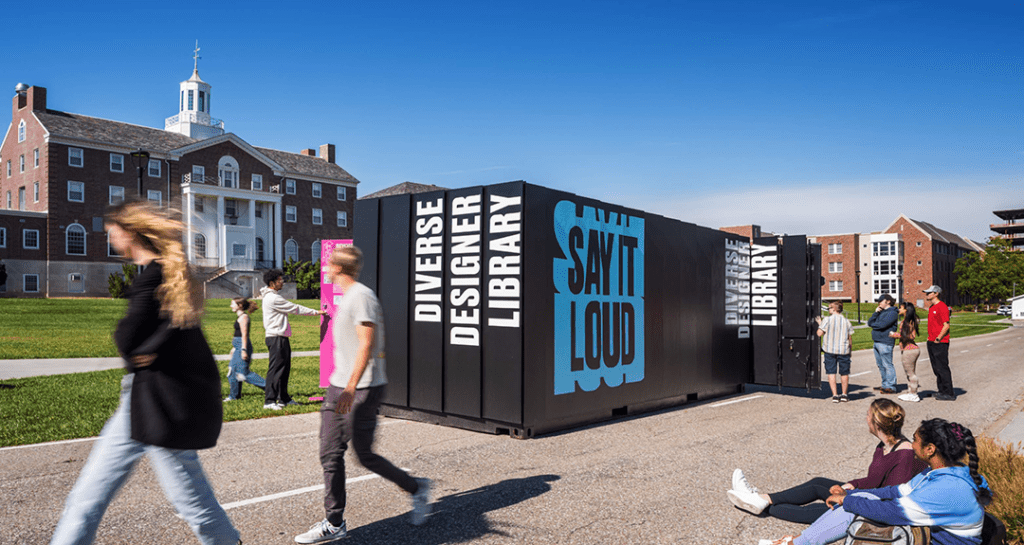
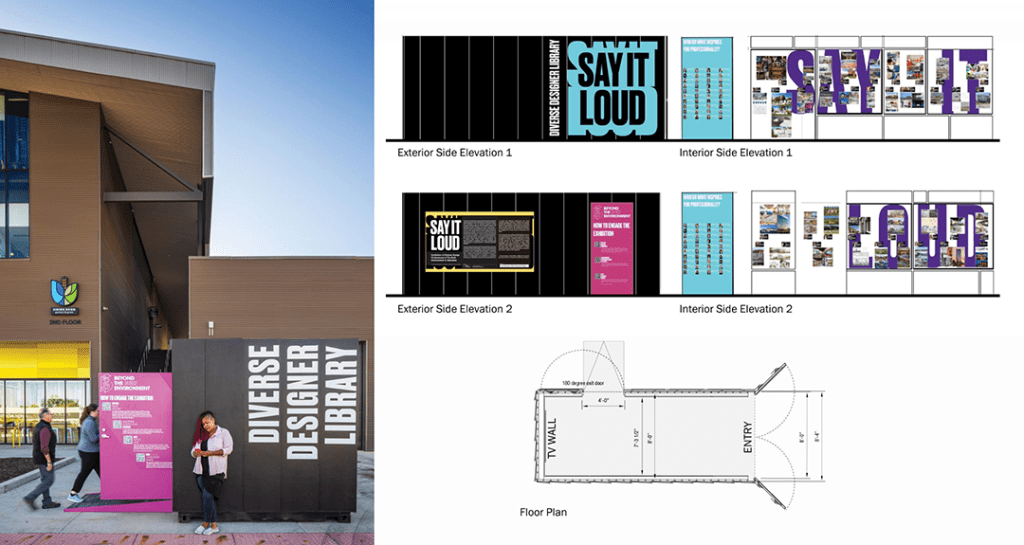
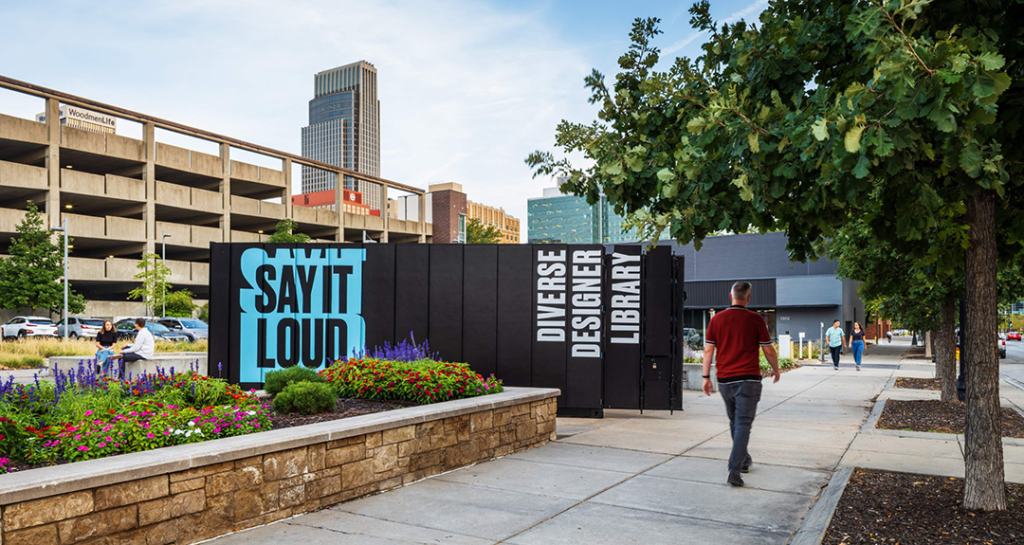
The exhibition’s façade is an interpretation of the shipping container’s native profile, enlarged to create shadow lines that enhance visual interest and maximize the surface for graphics and signage. While the exterior was a significant part of the construction focus, once finished, it ultimately served as a refined backdrop that highlights the work and testimonials of the diverse designers, bringing them to the forefront of the exhibit.
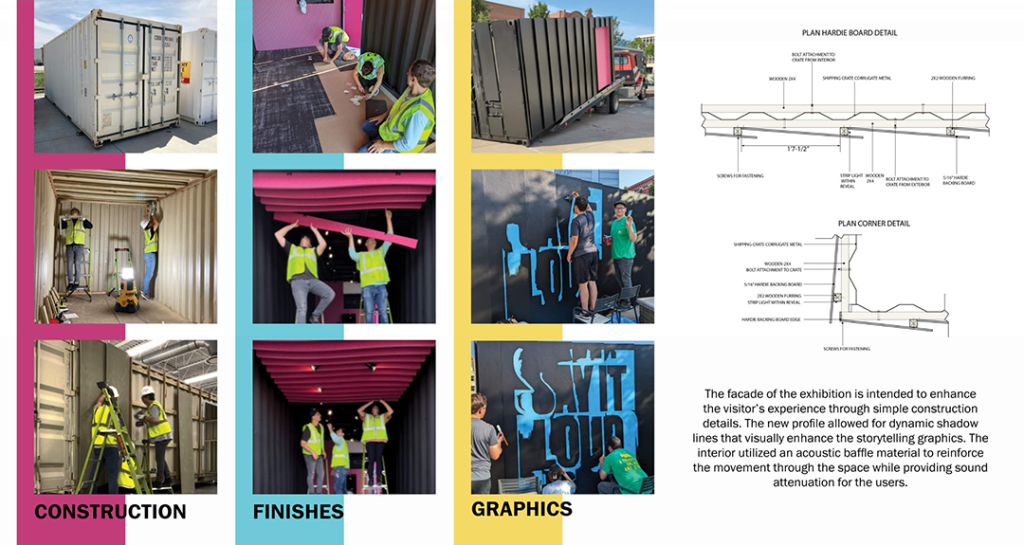
The exhibition was created through close collaboration with a local construction firm, the design team and an acoustical PET manufacturer. The construction team provided tools, workspace and a 20-foot shipping container. The design team transformed the container into a dynamic exhibition platform, while the acoustical manufacturer supplied PET baffles for the interior finishes; all working together to realize a cohesive vision. The exhibition reimagines the container facade by modifying its original profile to produce bold shadow lines that enhance visual interest and provide ample space for storytelling graphics and signage. Although the exterior was given a new shell, it ultimately functions as an elegant background for the portraits, quotes, and testimonials of 45 Nebraska-based designers. Inside, the ceiling features PET acoustic baffles that define circulation pathways and manage ambient sound in audio-enhanced zones. These surfaces both soften the interior environment and guide visitors through layered narrative experiences. The design team created a versatile interior that asks each exhibitor a thoughtful question: “What has been your experience as a diverse designer?” They incorporated printed portfolios along with fifteen video interviews to give visitors deeper insight into each designer’s journey, challenges and successes. By combining fabrication, material selection, graphic strategy and spatial layout, the exhibition shows how disciplined design and intentional detailing can shape storytelling. The container’s transformation demonstrates that careful construction techniques and coordinated craftsmanship can elevate a compact module into a compelling, immersive experience.
The initiative highlights minority professionals in Nebraska’s built environment—architects, contractors, engineers, interior designers, landscape architects and planners who identify as women or Black, Indigenous, or People of Color (BIPOC). Forty-five designers from across the state share their work through printed exhibits and video interviews inside a repurposed shipping container. To promote equitable access, the design team deployed the container to multiple community-centric locations in Omaha and Lincoln: Old Market Downtown, Highlander Accelerator, University of Nebraska–Omaha and UNL’s Lincoln campus. Visitors scan QR codes to learn about designer profiles, vote in a People’s Choice Award and explore a virtual resource library that extends learning beyond the exhibit. By bringing the exhibit into neighborhoods and schools, the project increases the visibility of diverse designers and targets younger generations who may see themselves reflected in the stories shared. The team designed the container as both a platform for showcasing work and a tool for community outreach, placing it at accessible venues to engage local youth and college students. Inside, the layout emphasizes clarity and storytelling. Printed panels display designers’ portfolios and narratives, while video interviews provide deeper insight into their experiences, challenges and achievements. Additional QR codes link users to online content, expanding access to resources for aspiring design professionals. The exhibit elevates underrepresented design professionals by showcasing their work and stories in accessible, real-world settings. This approach broadens awareness and creates opportunities for the next generation. The exhibition underscores that representation matters by highlighting who shapes our cities, structures and landscapes.
 studio ambiguous