Abstract
This thesis aims to speculate on the future ‘Image of Domesticity’ in the Post-Internet era; by challenging the function of objects in the domestic sphere in relation to internet perpetuated culture. The architectural implications of digital media shifting our desires within the domestic sphere have become a reality as the flow of information in and out of the home breaks down the boundary or ‘ontological security’ that has guarded the home for centuries. The theory established, explores the critical dialog developed by Post-Internet artists, architects, and philosophers to explore societies fetish with the commodity of the image through the internet and its impact on the restructuring of the domestic sphere.
Post-Internet establishes itself as after the internet has become ubiquitous, causing the internet, specifically the subset of social media, to alter our desires. This projection of the domestic sphere borders the line between our physical and digital existences speculating on the future while subsequently developing a critique on our con-temporary cultural landscape with the ubiquitous internet.
Thesis Statement
This thesis will use architectural critique to explore and speculate on a new image of domesticity in the Post-Internet era. By Implementing the critical dialog embodied by Post-Internet theory, this research will question and understand the internet’s impact on the commodity of the image and its eventual effect on the function of the objects that compose the domestic sphere.
Alexa, What is the Image of Domesticity Post-Internet?
EXPLANATION
The video, “Alexa, what is the Image of Domesticity Post-Internet,” Is an Alexa guided journey through the development of societies fetish for the image perpetuated by the internet and the future impact on the domestic sphere. Alexa’s three-part journey covers the three main topics of research. The first, Alexa guides the viewer through the many questions impacting the domestic sphere in relation to the internet. The second part is a journey through the decoding of objects in historical images of domesticity eventually leading to the understanding of Jean Baudrillard’s “System of Objects” and how it is interpreted to understand the objects that compose the domestic sphere. The third follows concepts of Marshall McLuhan to trace the domestication of the internet through previous forms of mass communication technology. The video concludes with the question “What happens when we can no longer distinguish between utopia and dystopia?” A question left open-ended and ambiguous intentionally to provoke discussion amongst the viewers.
REPRESENTATION
The video is composed of three main parts: The Twitter feed, the gif/ Image webpage, and supplemental videos. The video is designed to bombard the viewer with an overload of information, similar to our lives on the internet as we are continually barraged with notifications, advertisements, pop-ups, and auto-play videos. The twitter feed is the ‘electronic documentation’ of the words spoken by Alexa. As she speaks the twitter feed simultaneously transcribes and tweets her words broadcasting them over the ‘internet.’ Providing documentation of the words spoken but documentation that quickly disappears as it is bumped further on the timeline. The main images of the video are displayed on multiple web pages that open and close based on the content shown. Each tweet from Alexa is paired with a gif or image corresponding to the words. The images and gifs are grainy and low resolution however their impact on the view carries more weight than the spoken words of Alexa. The images and gifs speak to our societies development of ‘Non-descriptive Culture’ where images regardless of the resolution are desired over the written word. The supplemental images and videos range from historical movies such as Mon Oncle to pop cultural references from South Park. These videos pop-up and disappear rapidly continually shifting and moving around the screen. Finally, the whole video is played out on the backdrop of a space-themed desktop.
What happens when we can no longer distinguish between utopia and dystopia?
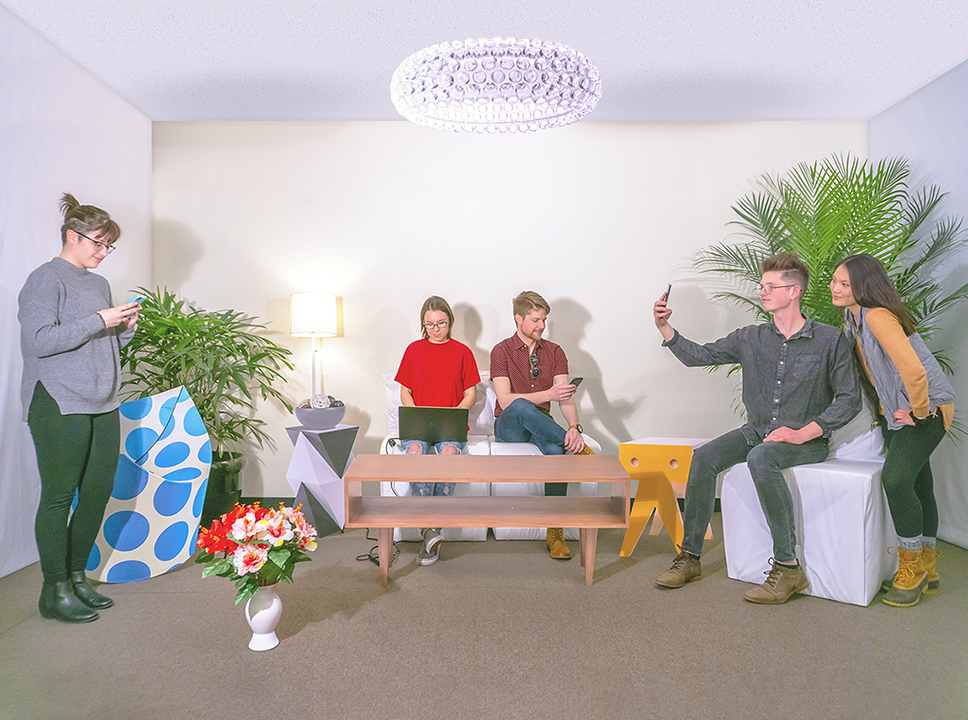
OUR SOCIETY LONG AGO LOST ITS GRIP ON THE PHYSICAL WORLD BECOMING EVER MORE IMMERSED IN OUR DIGITAL EXISTENCE.
OUR DESIRE FOR THE IMAGE AND LACK OF PHYSICAL INTERACTION WITH OBJECTS CHANGED THE FUNCTION OF THE OBJECTS IN OUR DOMESTIC SPHERE.
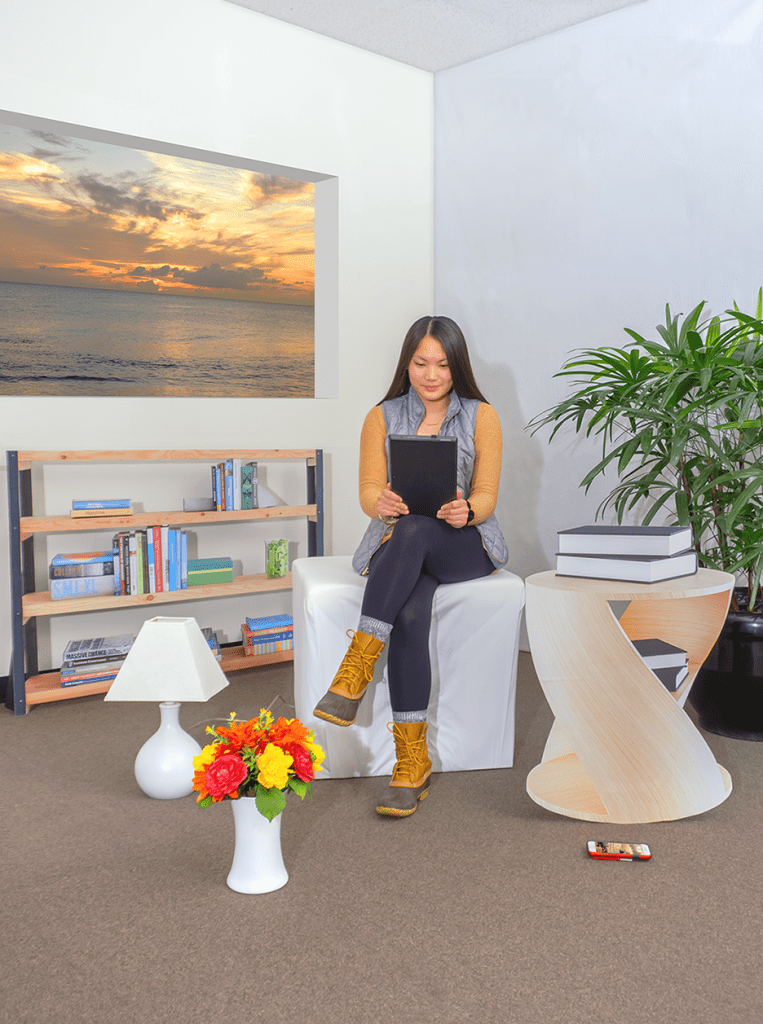
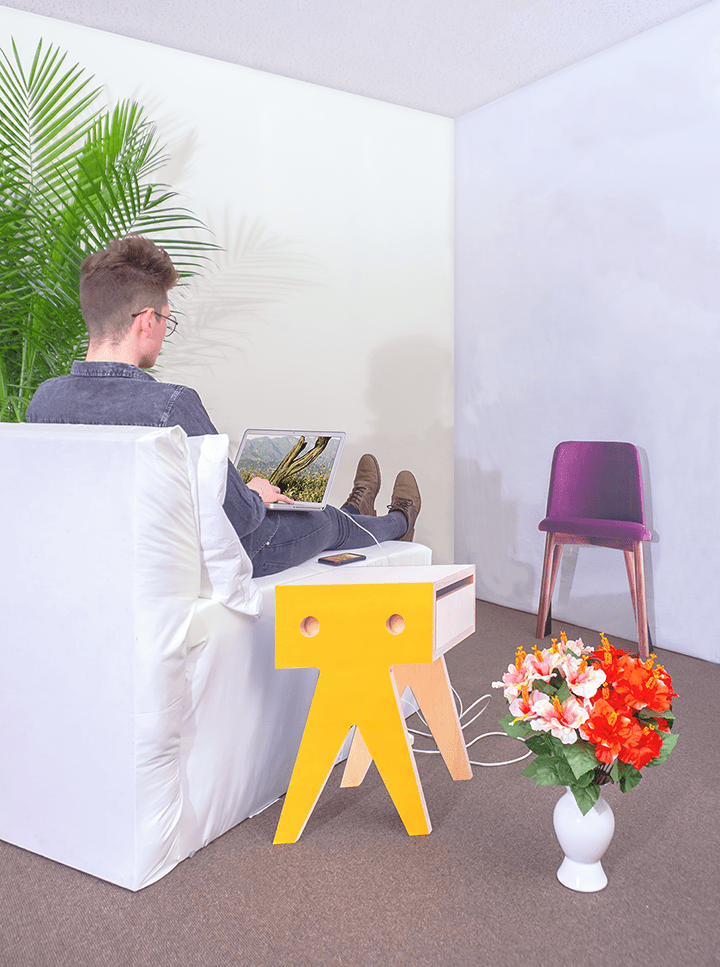
OBJECTS HAVE BEEN REDUCED TO IMAGES ORIENTING THEMSELVES AROUND THE VIEW OF THE CAMERA SO THAT THEY CAN BE CAPTURED AND SHARED AS A COMMODITY.
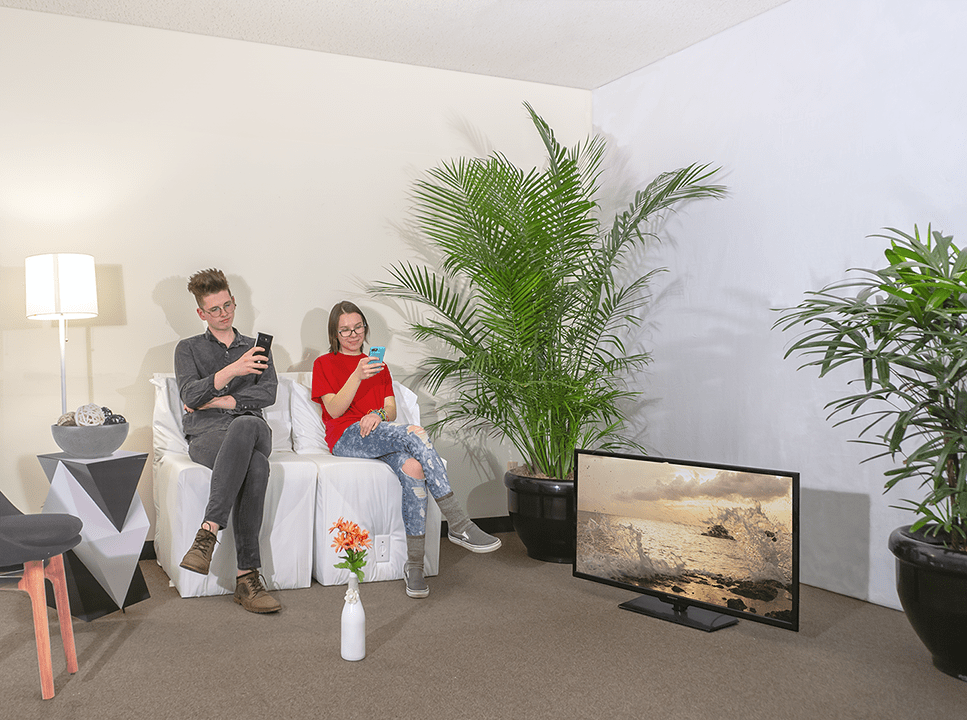
THERE IS NO LONGER A DESIRE TO INTERACT WITH PHYSICAL OBJECTS. OUR SOCIETY ONLY DESIRES COMFORT TO FACILITATE OUR TIME ON ELECTRONIC DEVICES.
PHYSICAL OBJECTS THAT EXIST TRANSCEND STYLES, MOVEMENTS, AND CONTEXT BECOMING INDISCERNIBLE EXISTING VOID OF ALL ATTRIBUTES BEYOND THEIR UTILITARIAN FUNCTION.
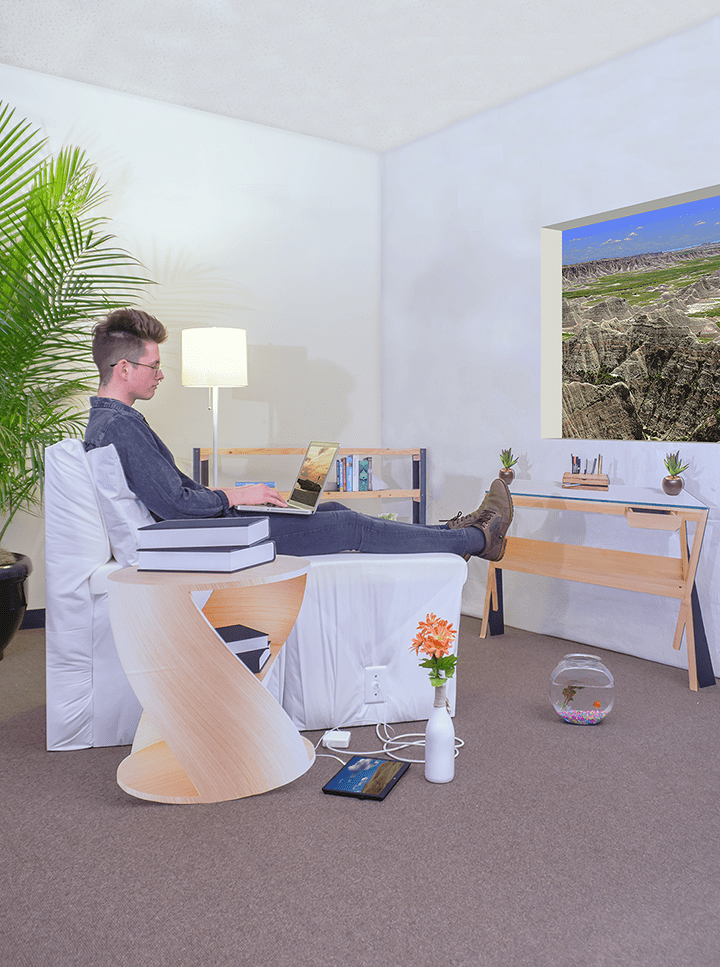
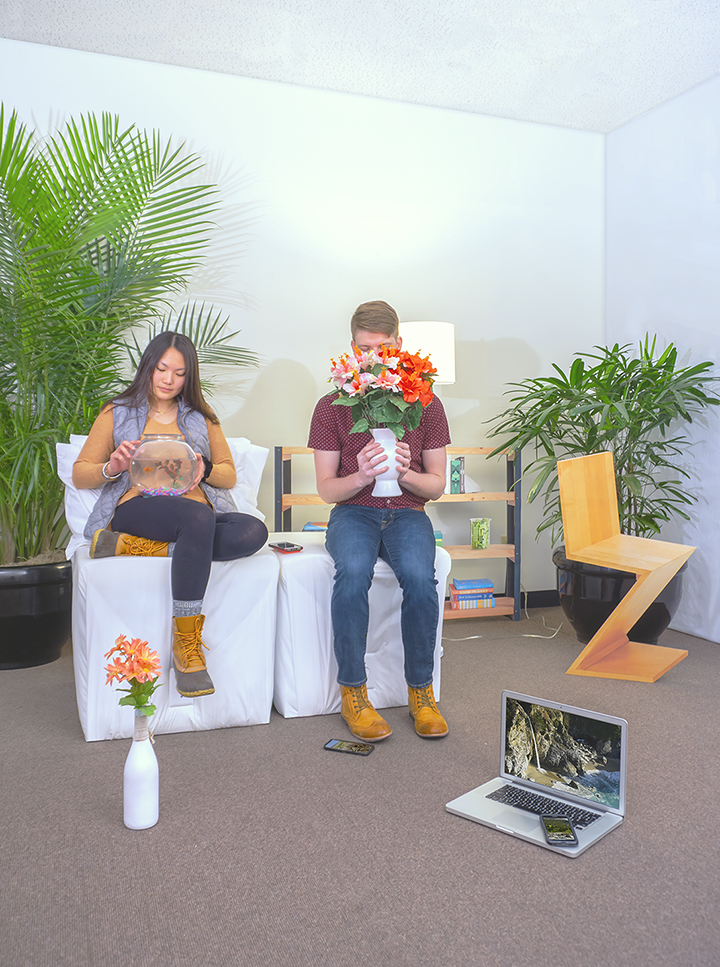
SOCIETY, INFLUENCED BY THE INCREASED POWER OF TECHNOLOGY CHARTERED AN AMBIGUOUS TRAJECTORY SIMULTANEOUSLY CREATING THE DOMESTICATION OF ELSEWHERE AND EVERYWHERE.
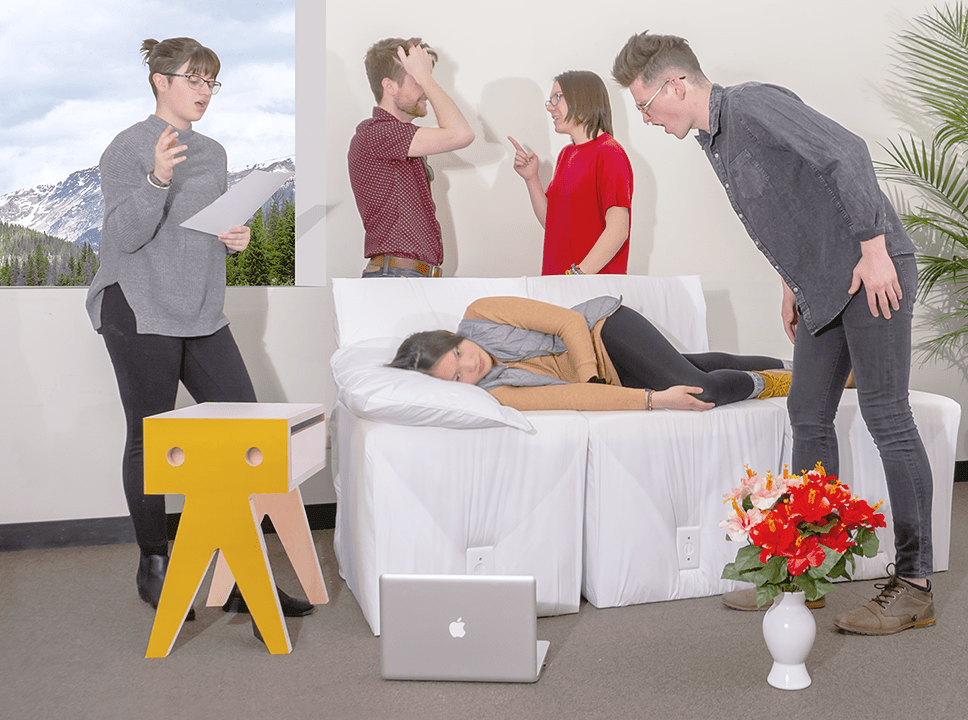
PRIVACY-NON-PRIVACY. THE DOMESTIC SPHERE IS NO LONGER A PLACE OF ONTOLOGICAL SECURITY BUT EXPOSED CONTINUOUSLY TO OUR DIGITAL COMMUNITY.
WE RECEIVE CONSTANT FEEDBACK ON OUR DOMESTIC SPHERE; FIENDING FOR THE ECSTASY THAT COMES WITH EVERY “LIKE” VALIDATING OUR DIGITAL CAPITAL.
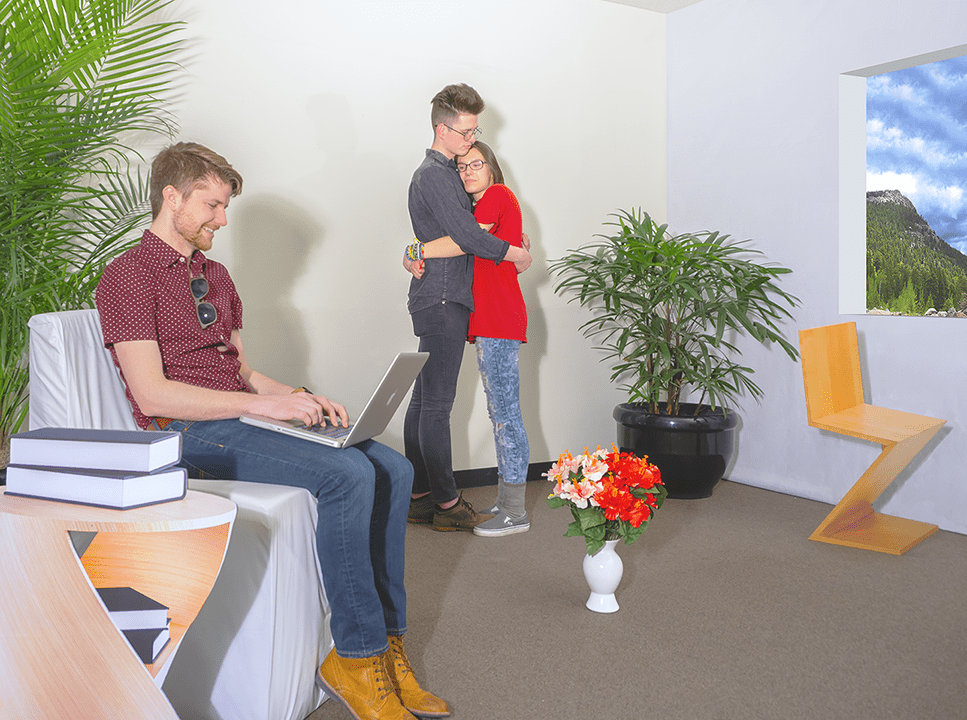
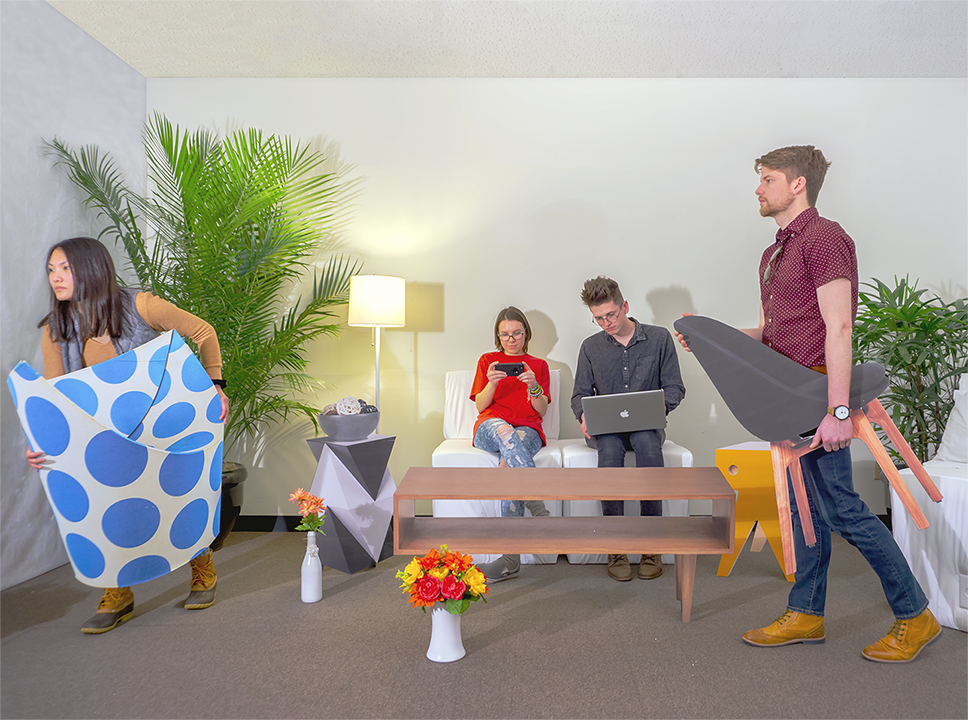
OUR REALITY IS NOT FALSE. IT HAS BECOME RELATIVE TO OUR DIGITAL EXISTENCE.
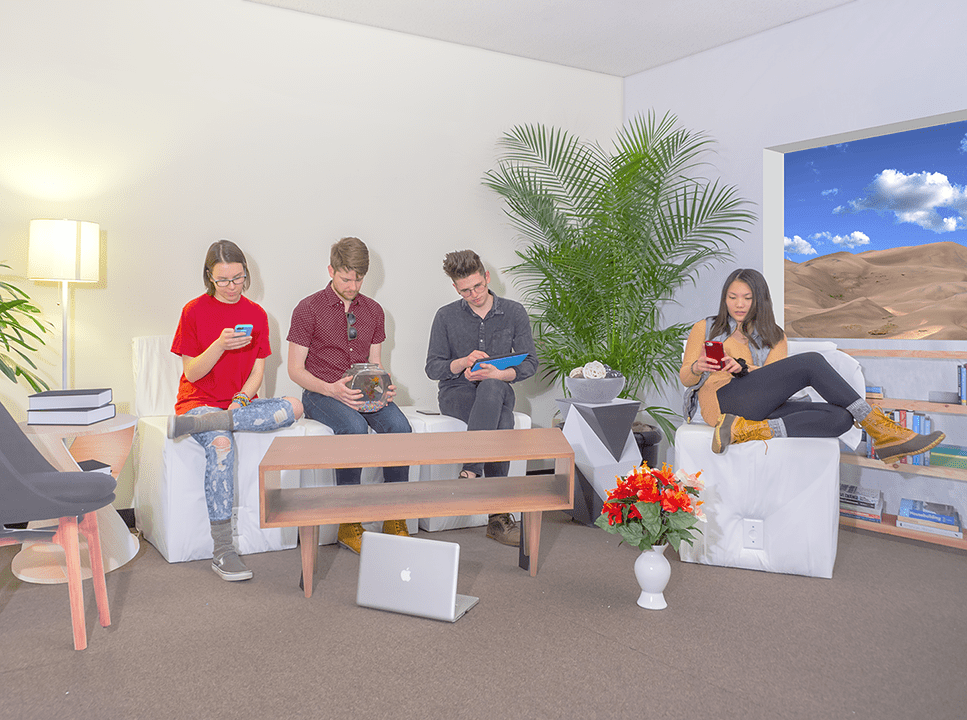
THIS IS THE NEW IMAGE OF DOMESTICITY PERPETUATED BY OUR DESIRES AND THE UBIQUITOUS INTERNET
A Design Thesis by: Adam J. Wiese completed with Advisor: Jason Griffiths
Thank you to my thesis advisor, Jason Griffiths, for sharing your extravagant breadth of disciplinary knowledge with me. A special thanks to my ‘unofficial’ advisors
Cruz Garcia and Nathalie Frankowski, the energy and excitement you bring to the profession is an attribute I will carry with me for the rest of my life.
This work is dedicated to Alex Moore my thesis mate and Sarah Nelson for listening to me continuously attempt to understand Post-Internet.
A special ‘thanks’ to critics: Jeff Day
Geoff Deold
Dr. Peter Olshavsky Marc Maxey Zoe Cope
Catherine De Almeida Megan Elliott
 studio ambiguous