April 27th 2018, Architecture Hall,, 11am to 7pm
ROOM
What happens when we can no longer distinguish between utopia and dystopia? – Geert Lovink
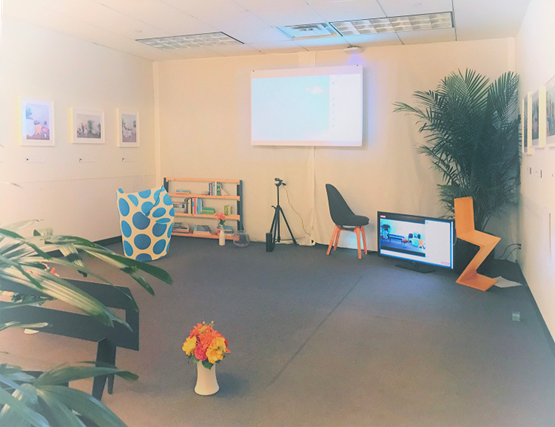
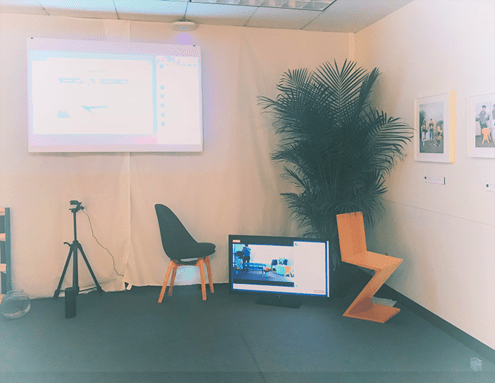
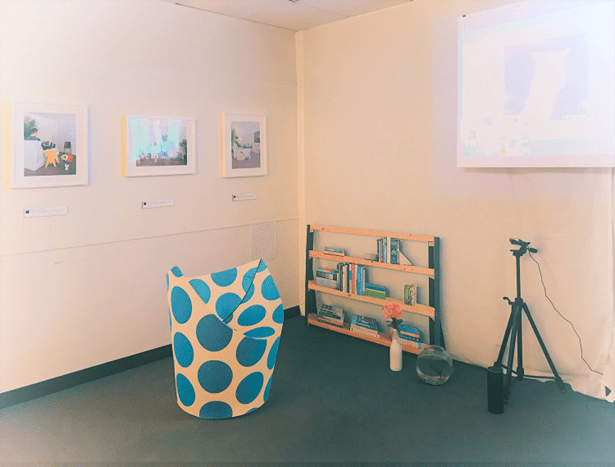
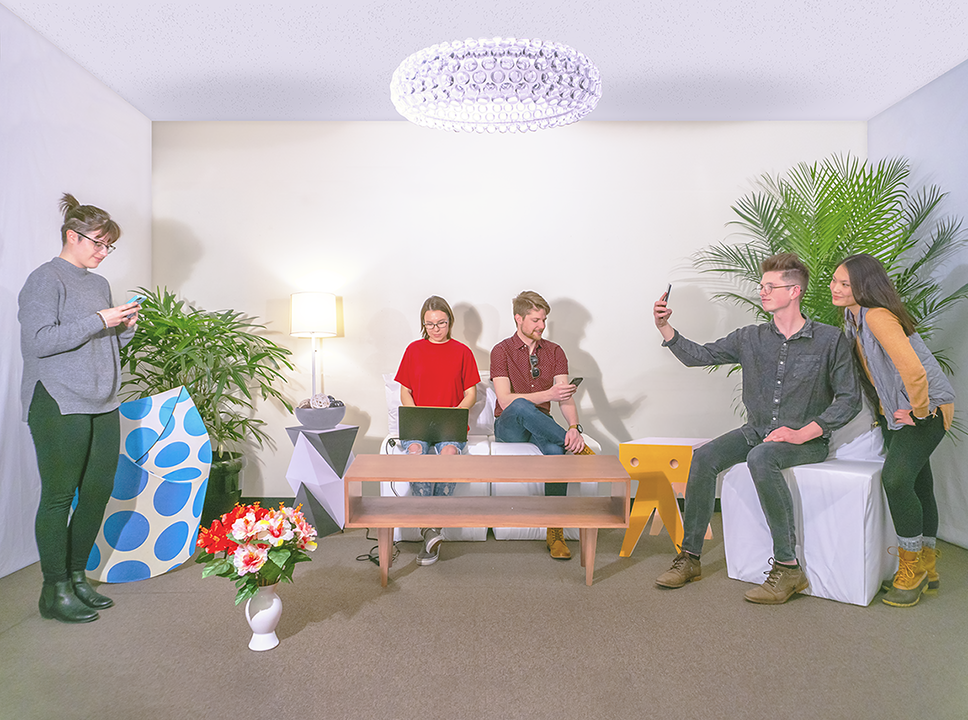
This room is our new domestic space. It has been completely immersed in the networks and nodes of the internet. Societies desires, perpetuated by the internet, caused the domestic sphere to update. Changing the way, we view and interact with objects in our domestic space. The image of ‘home life’ was reborn through the internet. Our domestic sphere was now fully connected to our digital existence receiving constant feedback from our global community. The flow of information in and out of the home had become equivalent to any other place in our physical world. Dissolving the boundary that had shrouded the domestic sphere for centuries.
The room is not a living room. It is not a bedroom. It is a space defined by society as flexible. The room’s white walls allow the Comfort Cubes and ‘indiscernible objects’ to disappear and the images of objects to take precedence when viewed through the lens of our devices. There are no interior partitions as that would divide our flexible space and obstruct the viewing angles of our cameras. The boundary walls and Comfort Cubes flow with electric current and wireless connectivity allowing us to stay fully connected and immersed in our digital existence.
The internet transported us to another place. No matter where we were in our physical existence when connected to the internet we could be elsewhere. In the domestic sphere, the internet allowed us to domesticate this elsewhere bringing it into our domestic sphere. As we began to preference our digital reality over our physical existence, the screens and windows became indistinguishable. The landscapes of elsewhere fill the screens and windows of the room as our domestic sphere is transported to a new… advanced…extraordinary…elsewhere.
COMFORT CUBES
There is no longer a desire to interact with physical objects. Our society only desires comfort to facilitate our time on electronic devices.
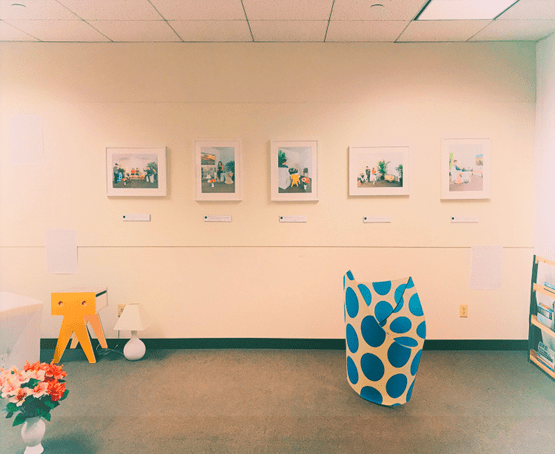
The traditional designed object of the past was no longer desired. Having been discarded from the domestic sphere society searched for an object that would satisfy their new desires. An object that would provide ultimate comfort as they spent their lives online. An object that existed void of design becoming indiscernibly discrete. An object that would never become outdated, never out of style, and would never interfere with the image of their domestic sphere. After years of confusion in the domestic sphere society unanimously chose to domesticate the ‘Comfort Cube.’ The ‘Comfort Cube’ satisfied the desires of society and their digital existence. It separated the user from the ground caressing the body in a plush cushion mimicking the clouds of our physical world; furthering the separation between our physical and digital existence. Allowing for society to fully immerse themselves in the networks and nodes of their digital world. The ‘Comfort Cube’ allowed for ultimate flexibility simultaneously transforming itself from a seat, to armchair, to footrest, to sofa, and to a bed. Covered in a white fabric the ‘Comfort Cube’ blends in with the flexible white space of our domestic sphere allowing the images of the objects to stand prominently in the domestic image. The ‘Comfort Cubes’ receive a constant flow of power providing the user with an endless power source reducing the need to be in the physical world, allowing them to spend more time physically interacting online.
CUTOUTS
CUTOUTS
Our desire for the image and lack of physical interaction with objects changed the function of the objects in our domestic sphere.
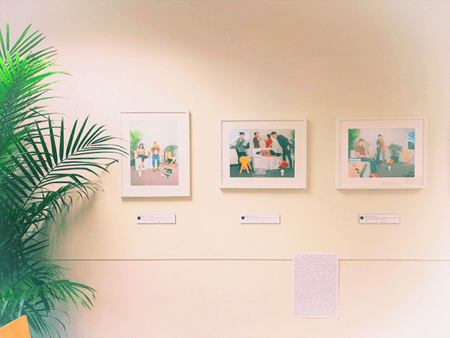
Objects have been reduced to images orienting themselves around the view of the camera so that they can be captured and shared as a commodity.
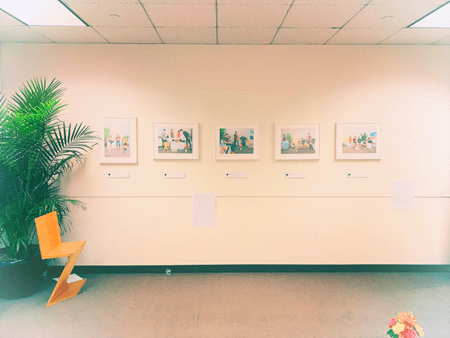
As the image began to dominate our societies desires, the objects that composed the domestic sphere began to fall out of relevance. We became consumed with the advancement of our digital capital and online presence. The domestic sphere transitioned from a theatrical set upon which life was played out to a staged still life designed to be photographed possessing the ability to change instantly based on the feedback received from our global community. There was no longer a need to have physical objects because our only interaction with them was through our cameras. The physical object became too cumbersome and slow. The object could not evolve at the pace of our digital existence. Faced with this dilemma society, again, forfeited their physical existence to benefit their digital reality. The domestication of the image as a designed object freed the domestic sphere from the lag of our historic ways. It satisfied our desires creating a domestic sphere that was relative to our digital existence. The images translated into our physical existence in the form of a cutout. The cutouts were designed base on the desire of being photographed. They became orientated around the views of our camera, allowing our domestic sphere to be photographed and shared informing our global community on the arrangement of our updated domestic sphere.
INDISCERNIBLE OBJECTS
Physical objects that exist transcend styles, movements, and context becoming indiscernible existing void of all attributes beyond their utilitarian function.
While our societies desires changed with the internet, there were still needs in the physical world that the digital world could not provide. The utilitarian objects that perform their tasks through physical hardware and not digital code needed to be transformed to conform to our new desires. After the domestication of the ‘Comfort Cubes’ society found that these utilitarian objects could follow the same principles of physical manifestation. The objects underwent a strenuous domestication process as society grappled with conforming these objects to benefit the image of their domestic sphere. The transition to ‘Indiscernible Objects’ was a gradual deconstruction of the historical objects that composed our domestic spheres for centuries.
PLANTS
We receive constant feedback on our domestic sphere; fiending for the ecstasy that comes with every “like” validating our digital capital.
Our reality is not false. It has become relative to our digital existence.
Fake or real. It does not matter when viewed through the lens of the camera. The plants and flowers that fill our domestic sphere are an aesthetic for the image. They remind us of a time when living plants, flowers, and succulents filled the domestic sphere connecting us to the physical world around us. The plants and flowers that fill our domestic sphere today have become flexible and dynamic, able to be moved and shifted around the domestic sphere as it updates. In our society, these objects have not been reduced to images. While we no longer wish to be held accountable for taking care of a living plant. Our society continues to desire the ambiance that the plant provides in the image of the domestic sphere.
POST-INTERNET WINDOWS
Society, influenced by the increased power of technology chartered an ambiguous trajectory simultaneously creating the domestication of elsewhere and everywhere.
The internet transported us to another place. No matter where we were in our physical existence when connected to the internet we could be elsewhere. In the domestic sphere, the internet allowed us to domesticate this elsewhere bringing it into our domestic sphere. As we began to preference our digital reality over our physical existence, the screens and windows became indistinguishable. The landscapes of elsewhere fill the screens and windows of our domestic sphere transporting us to a new … advanced… extraordinary… elsewhere.
WHERE DO WE GO FROM HERE?
It is imperative to understand that by no means does this research come to any conclusion that condemns digital media. It does, however, demonstrate that throughout history in the domestic sphere society has continuously forgone parts of their physical world, however small they may be, for their digital existence. Digital media possesses a double edge, contradicting itself with ever mission statement. It is true that our global community is stronger than ever. People can stay in contact across continents feeling closer to home than ever before. However, on the other side, these digital connections are just that… digital. They would not exist without the networks and nodes to support the global community. When a person removes themselves from their physical existence, disconnecting themselves from friends and family, because they value their digital friends more we begin to see a disconnect in digital medias goal. Within the confines of this research, we see society forgo the physical object because the image of that object was all that mattered to their digital existence. Once again, one could argue that the new domestic sphere created could begin to bring a form of Neo-Liberal ideology from the internet into the domestic sphere. No longer would humanity need to buy a wide range of expensive objects to fill their domestic sphere. The internet’s image search would have all the necessary building blocks to compose the domestic sphere of your dreams. Unfortunately, this dream would be as short-lived as Web 2.0’s Neo-labral model before capitalism took over. It would only be a matter of time before our capitalistic driven world would create markets out of this emerging trend. Making the domestic spheres transition to the cutout and comfort cube just another phase change in the domestic spheres evolutionary process.
The introduction of this research explained the constant tension that exists between our physical and digital existence. Before concluding the research, it is important to clarify a finding that could be considered obvious when viewed with an objective mind. We can never become fully digital. Our physical existence is our only true existence however, our digital existence is the most prominent existence inside of our physical world. While our society will undoubtingly continue to forgo its physical existence for its digital one we can hold solace that we can never become fully digital. In our con-temporary, it is essential that as a society and an architectural profession that we are ever critical of the digital technology we adopt within the domestic sphere and architectural practice. The digital technology that we surround ourselves with will undoubtingly impacts our physical existence in every way especially as we slip further into the digital world. It is imperative that we understand that the digital technology we create are merely tools to benefit our physical existence they should not be seen as a solution or band-aid to our physical world’s problems.
“What happens when we can no longer distinguish between utopia and dystopia?”
Finally, the contextualization of the question that guided this thesis through its research and eventual design. The quote initially comes from Geert Lovink’s book “Networks without a Cause.” When first reading this quote it was understood as a divide between utopia and dystopia. Lovink appeared to be describing a world divided where one half viewed the world created by digital media as a techno-utopia while the other half viewed technology as the catalyst for creating a dystopic landscape. Upon further exploration and contemplation, the question brings forth a more in-depth subversive scenario. A world where no one can tell if the world that society has created is utopia or dystopia. It is a world that is fully informed in the context of our digital and historical knowledge but disillusioned when it comes to our physical landscape. The question hints to a world where there is no longer a desire to have conflicting opinions or an opinion at all. It is the unanimous complacency of our society.
Our society long ago lost its grip on the physical world becoming ever more immersed in our digital existence.” 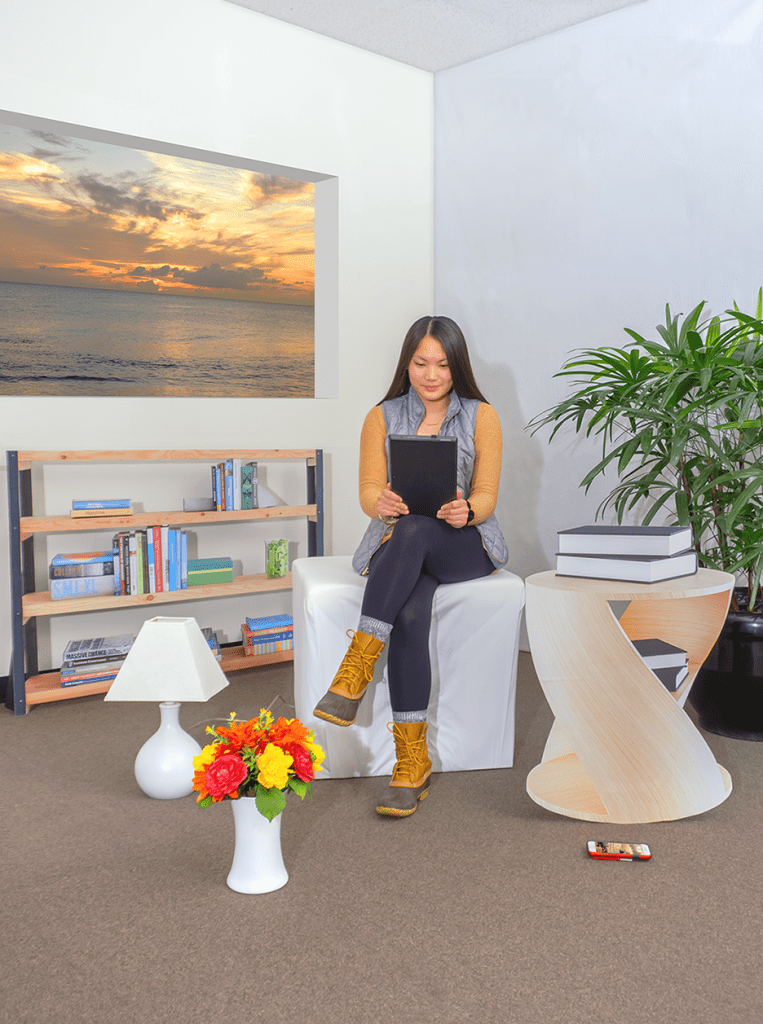
Our desire for the image and lack of physical interaction with objects changed the function of the objects in our domestic sphere.” 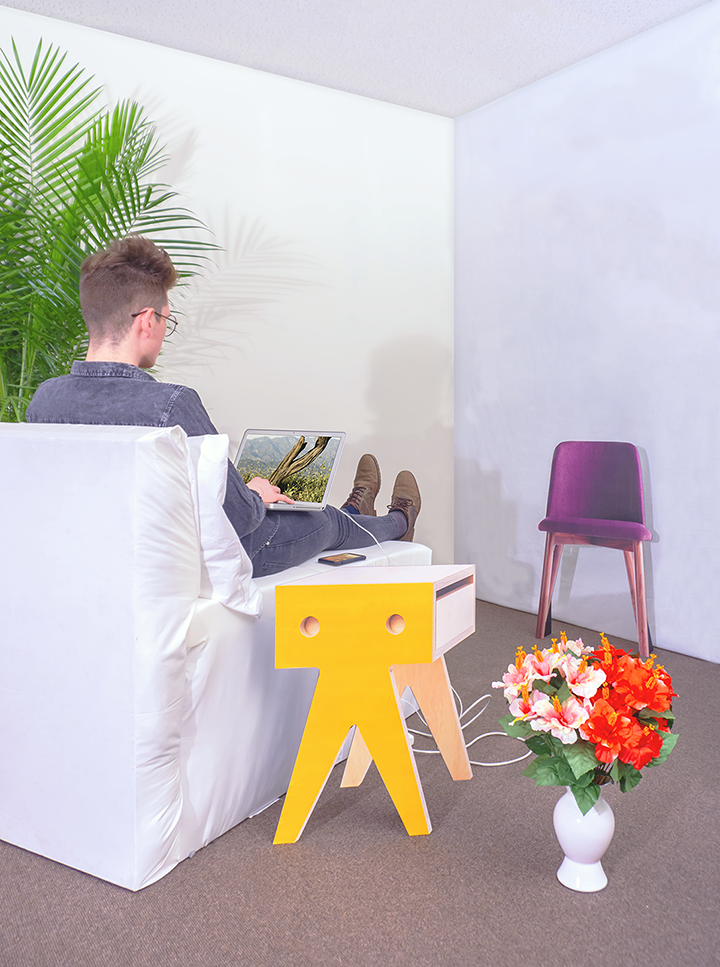
“Objects have been reduced to images orienting themselves around the view of the camera so that they can be captured and shared as a commodity.” 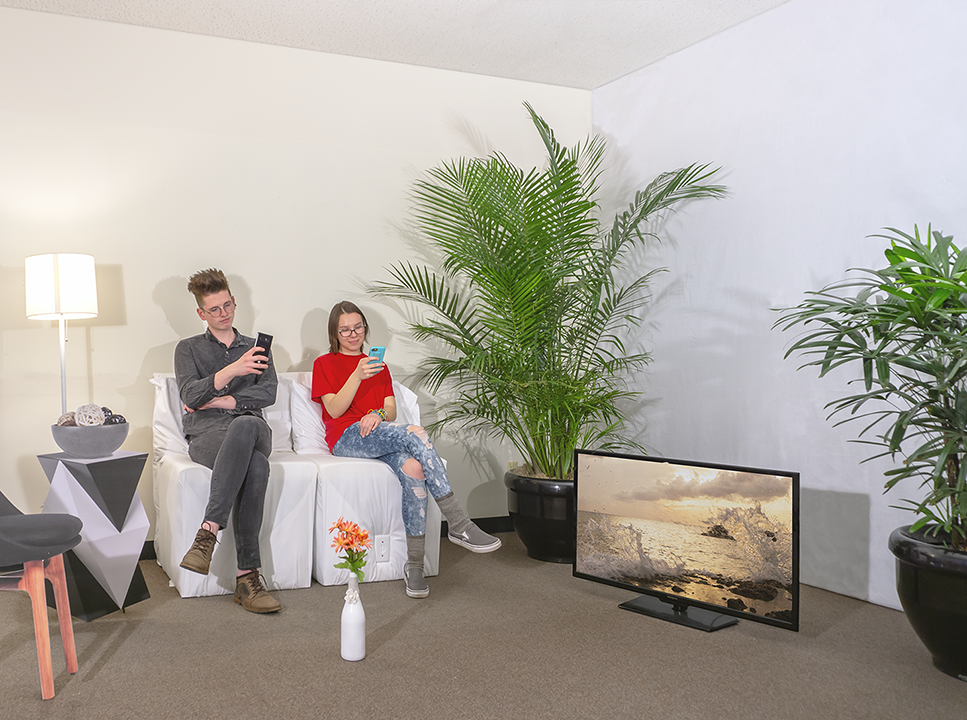
“There is no longer a desire to interact with physical objects. Our society only desires comfort to facilitate our time on electronic devices.” 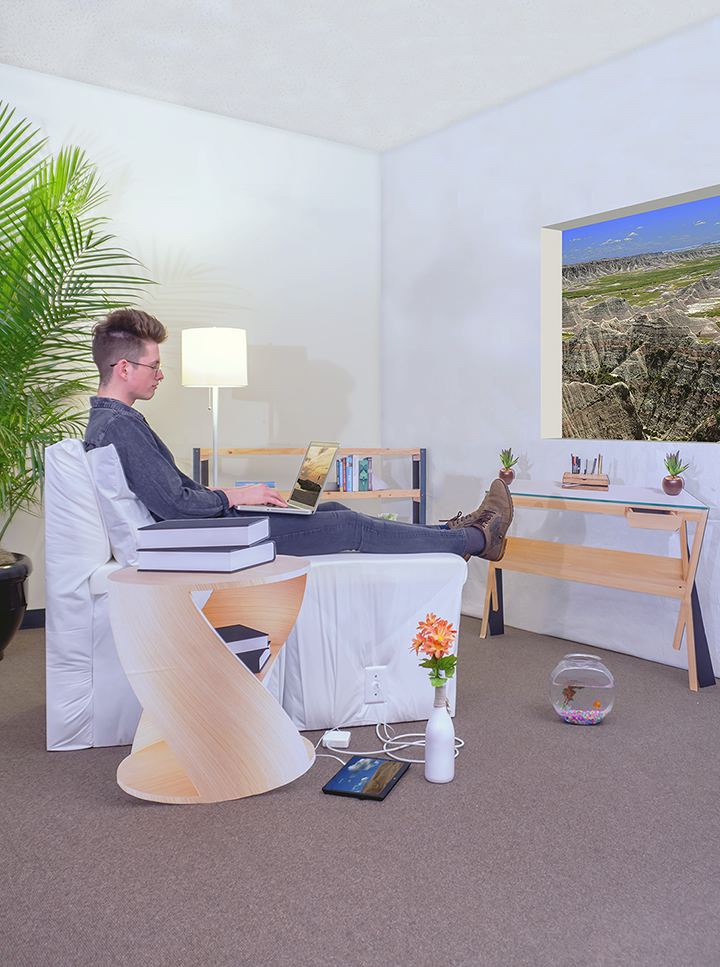
Physical objects that exist transcend styles, movements, and context becoming indiscernible existing void of all attributes beyond their utilitarian function.” 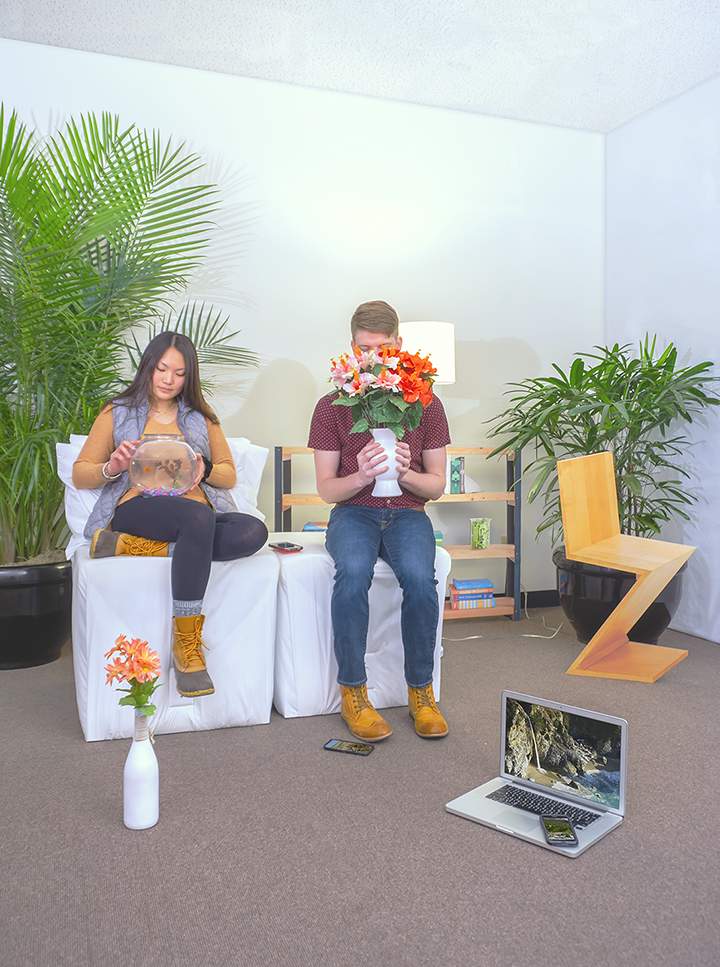
“Society, influenced by the increased power of technology chartered an ambiguous trajectory simultaneously creating the domestication of elsewhere and everywhere.” 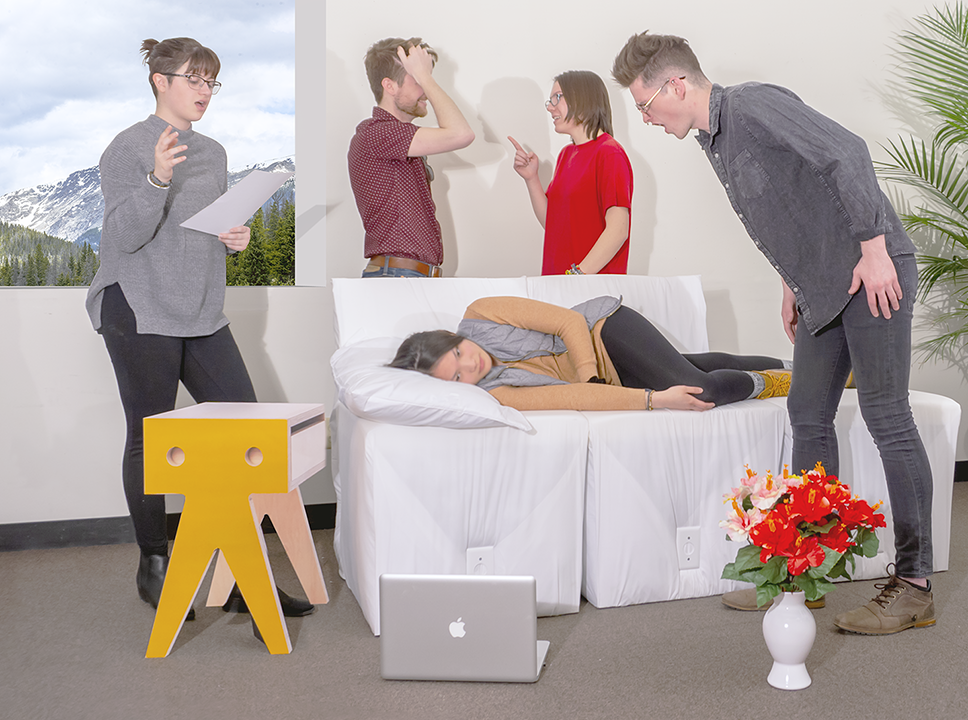
“Privacy-non-Privacy. The domestic sphere is no longer a place of ontological security but exposed continuously to our digital community.“ 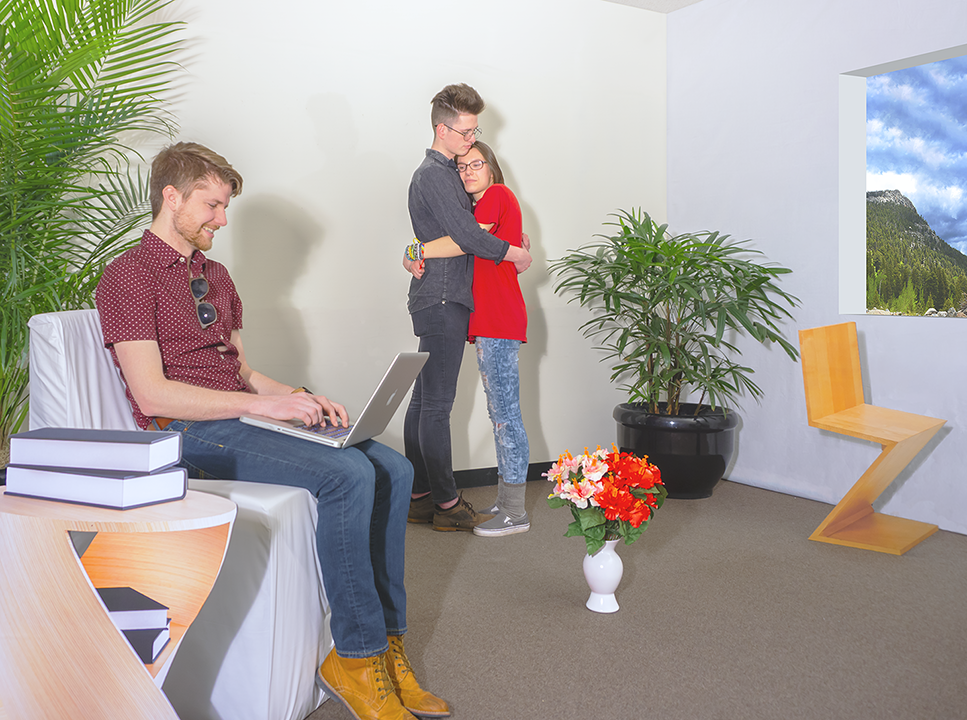
We receive constant feedback on our domestic sphere; fiending for the ecstasy that comes with every “like” validating our digital capital.” 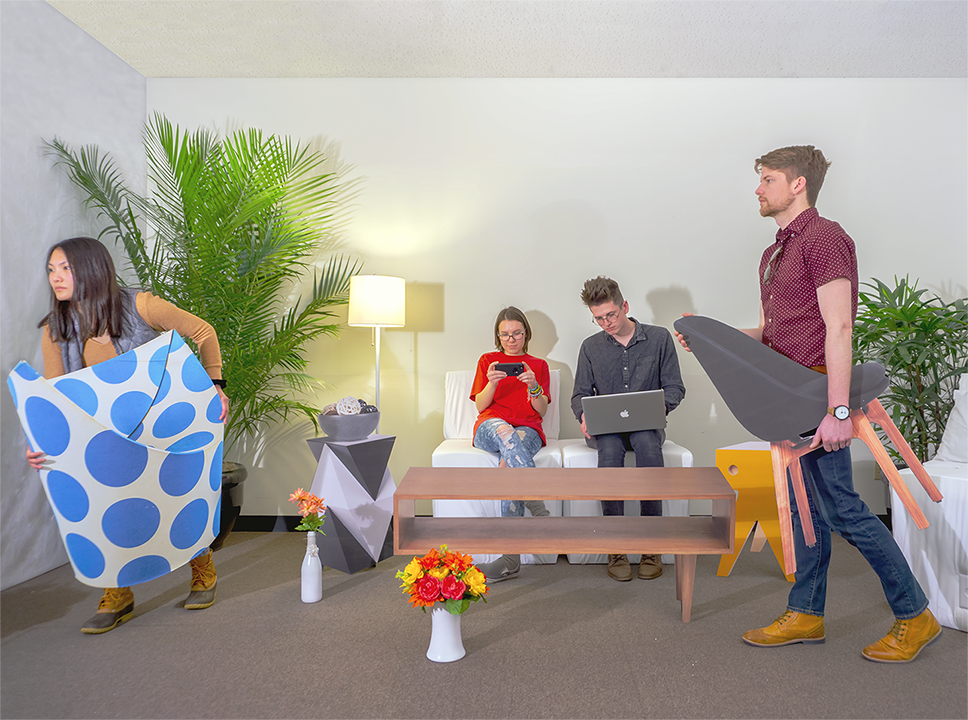
Our reality is not false. It has become relative to our digital existence.” 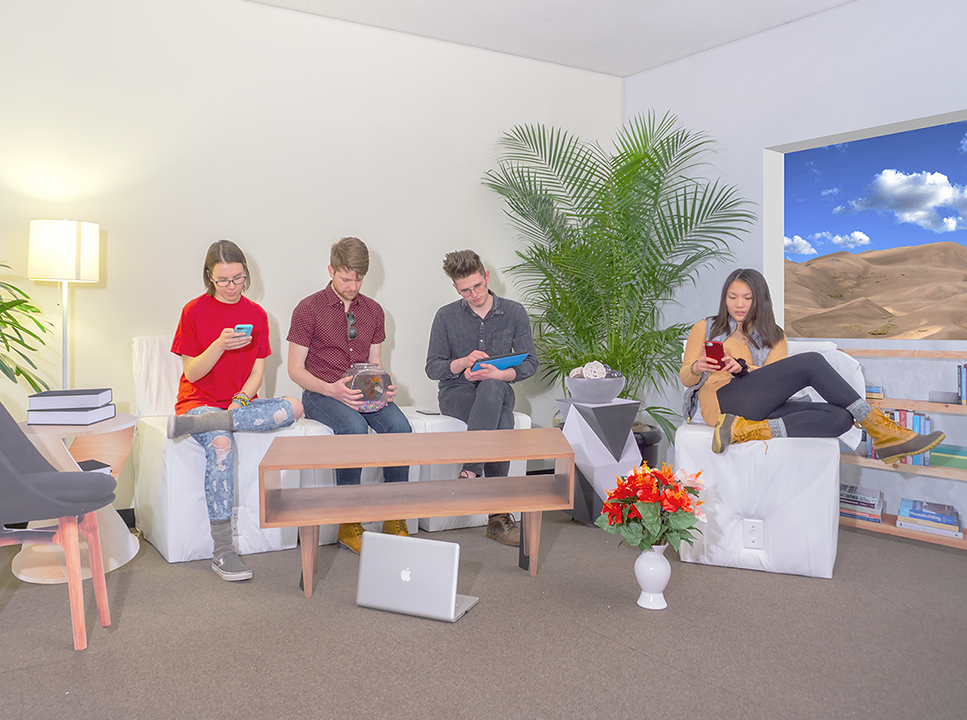
“This is the new image of domesticity perpetuated by our desires and the ubiquitous internet.”
 studio ambiguous